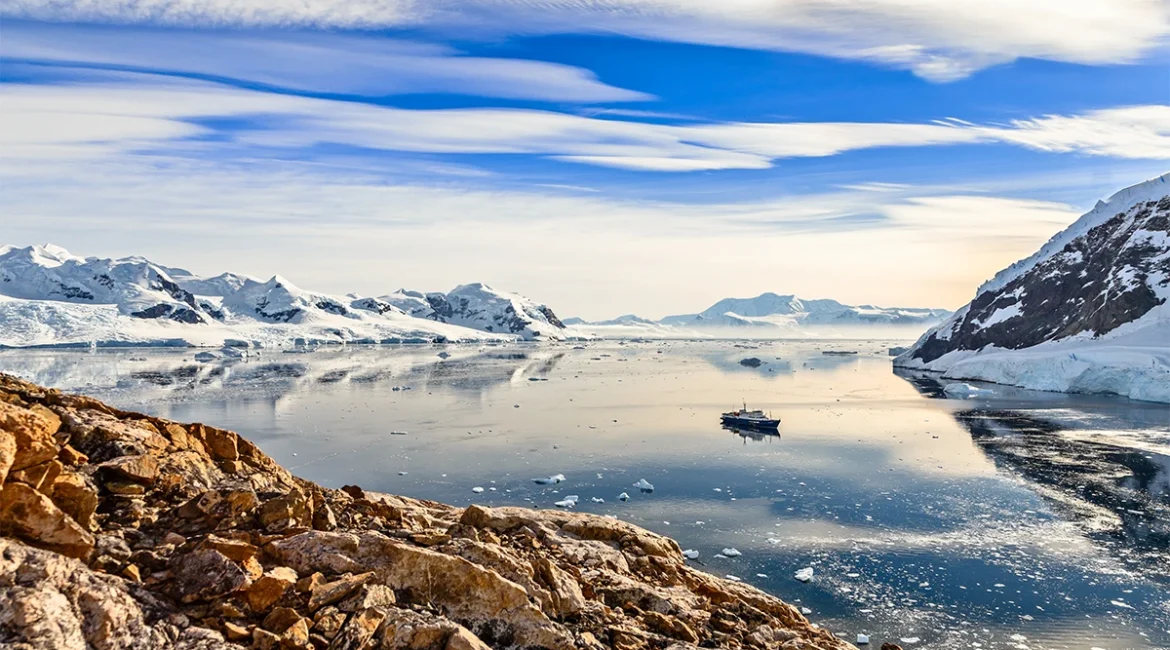
Antarctica is one of those destinations that rewires you. I remember the first time a traveler came to me wanting to plan a trip there and thinking: this is not a trip you simply book. It is a journey you have to earn, understand, and approach with the right guidance. The vast ice landscapes, towering glaciers, massive penguin colonies, and the untouched silence of this continent are unlike anything else on earth. And for travelers who are ready for it, an expedition cruise is the most extraordinary way to experience it firsthand.
Over the years, working with polar-bound travelers through my Fora and Virtuoso affiliations, I have developed a deep familiarity with how these journeys work, which operators deliver exceptional experiences, and how to match the right expedition to the right person. Here is what I want every traveler to understand before they commit.
What an Antarctica Expedition Cruise Actually Is
An Antarctica expedition cruise is a small-ship voyage built for exploration, not leisure. These vessels are purpose-built to navigate icy, remote waters while providing a platform for daily landings, guided excursions, and substantive educational programming. This is not a traditional cruise vacation. The destination is the point.
Rather than observing Antarctica from a distance, travelers go ashore multiple times throughout the journey. Zodiac boats carry guests from the ship to landing sites, where they walk on ice-covered terrain, observe wildlife at close range, and experience the continent directly. Expedition teams typically include naturalists, marine biologists, glaciologists, and polar historians who guide excursions, deliver onboard lectures, and bring the region’s ecosystems to life.
The experience is immersive, educational, and genuinely life-changing for travelers who arrive with the right expectations. If you are earlier in the process and still deciding whether expedition cruising is the right format for you, my piece on what expedition cruising actually is is worth reading first.
Where These Cruises Go
Most Antarctica expedition cruises focus on the Antarctic Peninsula, the northernmost and most accessible part of the continent. This region offers dramatic scenery, abundant wildlife, and manageable logistics relative to more remote Antarctic areas.
Many itineraries also include the South Shetland Islands, known for volcanic landscapes and dense wildlife populations. Longer voyages extend to South Georgia Island and the Falkland Islands, adding remarkable biodiversity and layers of polar exploration history. The specific route depends on cruise length, operator, and always on weather.
What You Can Expect to See and Experience
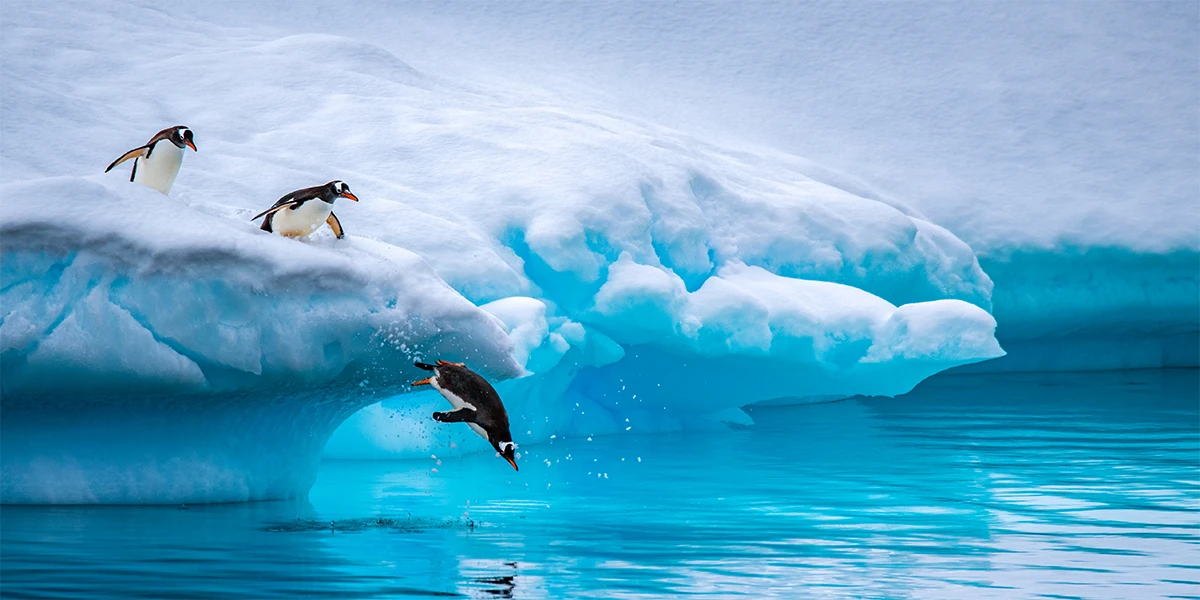
What strikes travelers most is the scale and the silence. Antarctica is defined by both. Vast ice formations, towering glaciers, and sweeping polar landscapes that exist nowhere else on earth.
Wildlife observation is central to the experience. Travelers commonly encounter gentoo, chinstrap, and Adélie penguins, seals resting on floating ice, and whales feeding in polar waters. Albatrosses and petrels are a near-constant presence during the ocean crossings.
Shore excursions include guided walks on the continent and Zodiac cruises through iceberg-filled channels. Optional activities on many expeditions include kayaking, polar plunges, and overnight camping on the ice. Every landing is carefully managed to protect the environment while allowing meaningful contact with the landscape.
The moment that stays with most travelers is not the dramatic one they expected. It is the quiet one: standing on the continent with no sound except wind and the distant bark of penguins, looking at a landscape that has existed almost entirely without human presence. That moment is impossible to manufacture and impossible to forget.
What Daily Life Looks Like Onboard
Life on an Antarctica expedition follows a structured but flexible rhythm shaped entirely by conditions. Each morning begins with a briefing from the expedition team outlining planned landings and activities for the day.
Most days include one or two excursions, weather permitting. When onboard, travelers attend lectures on polar ecosystems, climate science, and Antarctic history. Because conditions shift rapidly, expedition leaders adjust plans in real time to capture wildlife sightings or favorable landing windows. That adaptability is part of what makes each voyage genuinely unique.
The onboard atmosphere tends to be intellectually curious and relaxed. These are travelers who share a serious interest in exploration, and the conversation reflects that. I have heard more than one traveler describe the onboard community as one of the unexpected highlights of the trip.
Ship Size, Operators, and Why the Difference Matters
One of the most important factors I walk travelers through is ship size, and it matters more here than almost anywhere else. Antarctic regulations permit a maximum of 100 people ashore at any landing site at one time. Ships that carry more than 100 passengers may not be able to get everyone on land, which means some travelers spend portions of their expedition watching the continent from the water rather than standing on it. For a journey of this significance, that distinction is critical.
For many travelers, this is also a once-in-a-lifetime investment in both time and resources. The planning required, the distance, the cost, and the emotional weight of committing to Antarctica all point in the same direction: this is not a trip to get casually right. The wrong ship size or the wrong operator can mean the difference between an expedition that delivers on everything a traveler has imagined for years and one that falls frustratingly short.
Beyond capacity, expedition cruises vary widely in style and comfort. Luxury options from operators like Silversea, Ponant, and Nat Geo x Lindblad combine remote exploration with spacious accommodations, refined dining, and highly personalized service. More adventure-focused expeditions through operators like Quark, HX, and Atlas emphasize hands-on exploration with simpler onboard amenities. Neither approach is inherently better. The right one depends entirely on the traveler.
Smaller ships generally allow more frequent landings and a more intimate experience. Experienced operators provide stronger educational programming and better logistical execution under unpredictable conditions. These are the decisions I help travelers get right before anything is booked.
Fly-Cruise vs. the Full Crossing
Some operators offer fly-cruise options that fly travelers directly to Antarctica, bypassing the Drake Passage crossing by ship. The operators offering this include Silversea, Nat Geo x Lindblad, Quark, Ponant, HX, and Atlas. It is worth knowing, however, that fly-cruise itineraries carry their own uncertainty. Flights to Antarctica are frequently delayed or cancelled due to weather, and those delays can compress or significantly disrupt the full expedition experience. It is not a risk-free alternative to sailing. It is a different set of trade-offs, and I walk travelers through both sides of that decision honestly before they choose.
The Drake Passage, Ushuaia, and Timing Your Trip
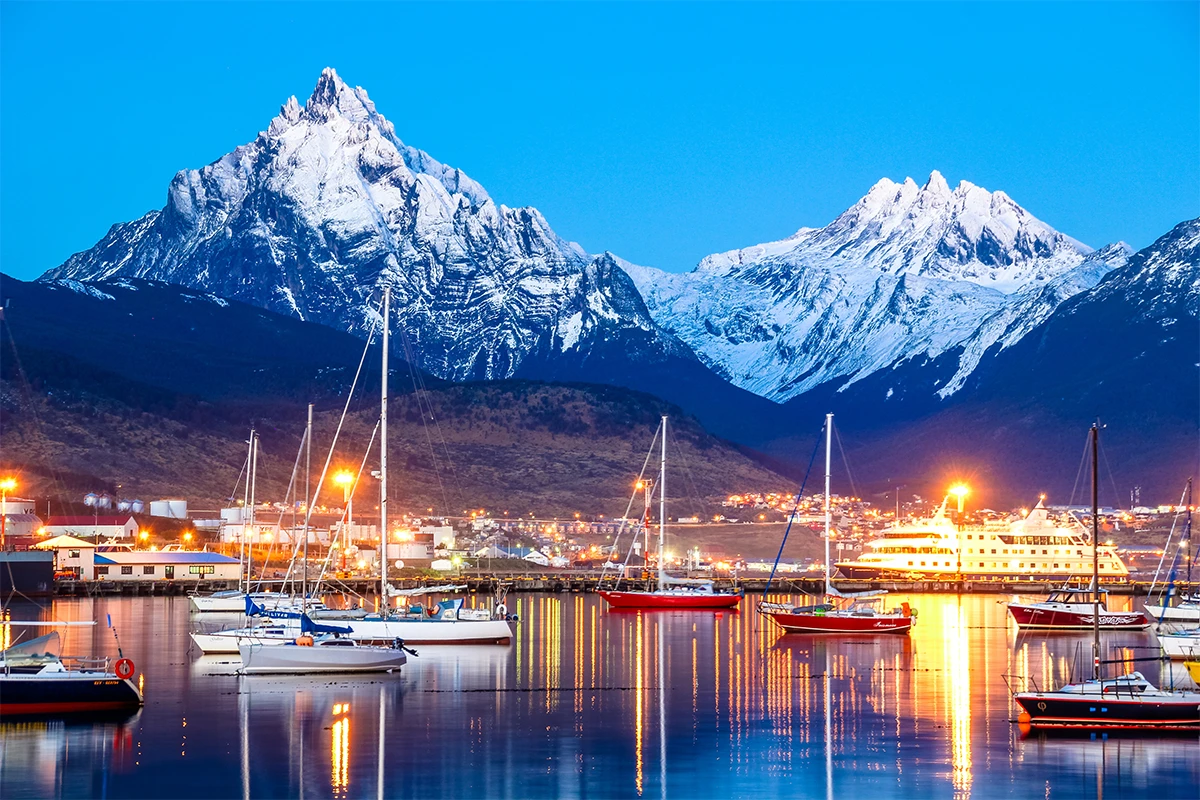
Most Antarctica expeditions depart from Ushuaia, Argentina, the southernmost city in the world. I cannot recommend building in a few extra nights there before your voyage strongly enough. Ushuaia sits at the very tip of Patagonia, surrounded by mountains and the Beagle Channel, and it has a character unlike anywhere else. I have spent time there myself, including a New Year’s Eve in what locals call the end of the world, and the energy of that place, remote as it is, stays with you. Arrive early. It sets the tone for everything that follows.
From Ushuaia, ships cross the Drake Passage, a stretch of ocean known for powerful currents and unpredictable seas. The crossing takes roughly two days each way. Some travelers find it an essential part of the Antarctic experience. Others prefer the fly-cruise option to avoid it, though as noted above, that path carries its own weather-related risks.
The Antarctic season runs from approximately November through March. Early season voyages offer pristine ice landscapes and the energy of penguin nesting. Later months bring increased whale activity and longer daylight hours. I help travelers think through which seasonal window aligns with their priorities, because the timing genuinely shapes what you see.
Why Antarctica Requires the Right Planning Partner
Antarctica is one of the most regulated travel environments in the world, and for good reason. Strict environmental guidelines control landing procedures and limit visitor numbers to protect ecosystems that are extraordinarily fragile. These regulations make operator experience and expedition expertise far more consequential than they would be on a typical trip.
Through my Fora and Virtuoso affiliations, I have access to preferred polar operators, exclusive amenity packages, and the kind of insider perspective that comes from working with Antarctica-bound travelers across many seasons and itineraries. I know which operators consistently deliver on the expedition experience and which ones look better on paper than they perform in practice. That knowledge is what I bring to this planning process.
Contact me today to start planning your Antarctica expedition. The best departures book out a year or more in advance, and the earlier we begin, the more options are on the table.