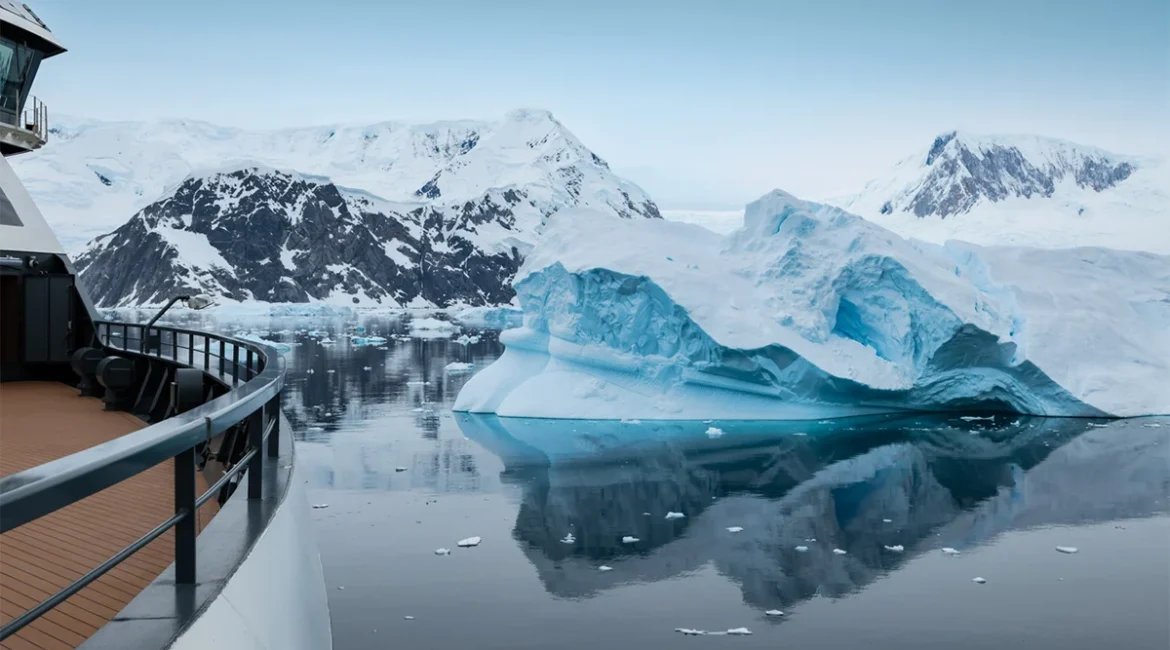
Understanding Small-Ship Exploration, Remote Destinations, and Immersive Travel Experiences
For many travelers, the word “cruise” still brings to mind large ships, crowded buffets, and entertainment-focused itineraries. Expedition cruising represents an entirely different approach to travel. Rather than prioritizing onboard attractions, expedition journeys focus on discovery, education, and meaningful engagement with some of the most remote and extraordinary places on earth.
Expedition cruises are designed for travelers who want to experience destinations deeply rather than simply visit them. These journeys emphasize access to environments that traditional tourism cannot easily reach, including polar regions, isolated islands, and wildlife-rich ecosystems. The experience centers on exploration, learning, and connection to the natural world.
Understanding what expedition cruising involves, how it differs from traditional cruising, and what type of traveler it best suits can help determine whether this style of travel aligns with your expectations.
What Expedition Cruising Actually Is
Expedition cruising is a form of small-ship travel focused on exploration and access to remote environments. Ships are purpose-built to navigate challenging waters and environmentally sensitive regions, allowing travelers to reach destinations that are inaccessible to larger vessels.
Unlike traditional cruise ships that function primarily as floating resorts, expedition vessels operate as platforms for exploration. Guests spend significant time off the ship participating in guided landings, wildlife observation, and educational excursions led by expert guides such as naturalists, marine biologists, historians, and regional specialists.
Because these ships typically carry far fewer passengers, often between 50 and 250 guests, the experience is more personal and immersive. The smaller scale allows for flexible itineraries, more direct access to landing sites, and a deeper connection to the surrounding environment. Rather than following a rigid schedule, the journey adapts to weather conditions, wildlife activity, and opportunities for exploration.
How Expedition Cruises Differ From Traditional Cruises
The most important distinction between expedition and traditional cruising lies in purpose. Traditional cruises are designed around comfort, entertainment, and predictable itineraries. Expedition cruises prioritize access, discovery, and education.
On a traditional cruise, travelers may spend most of their time enjoying onboard amenities such as shows, casinos, and resort-style facilities, with brief stops at major ports. Expedition cruising reverses that model. The destination drives the experience, and the ship serves primarily as transportation and a base for daily exploration.
Travelers participate in activities such as guided zodiac excursions, wildlife observation, and expert-led lectures that provide context for the region being explored. Daily briefings prepare guests for upcoming excursions, while onboard discussions help deepen understanding of local ecosystems, cultures, and environments.
This emphasis on learning and exploration attracts travelers who want more than relaxation. It appeals to those who seek meaningful experiences and deeper engagement with the places they visit.
Where Expedition Cruises Travel
Expedition cruises focus on destinations defined by natural beauty, ecological significance, and limited accessibility. These regions often have strict environmental protections or geographic conditions that require specialized ships and experienced crews.
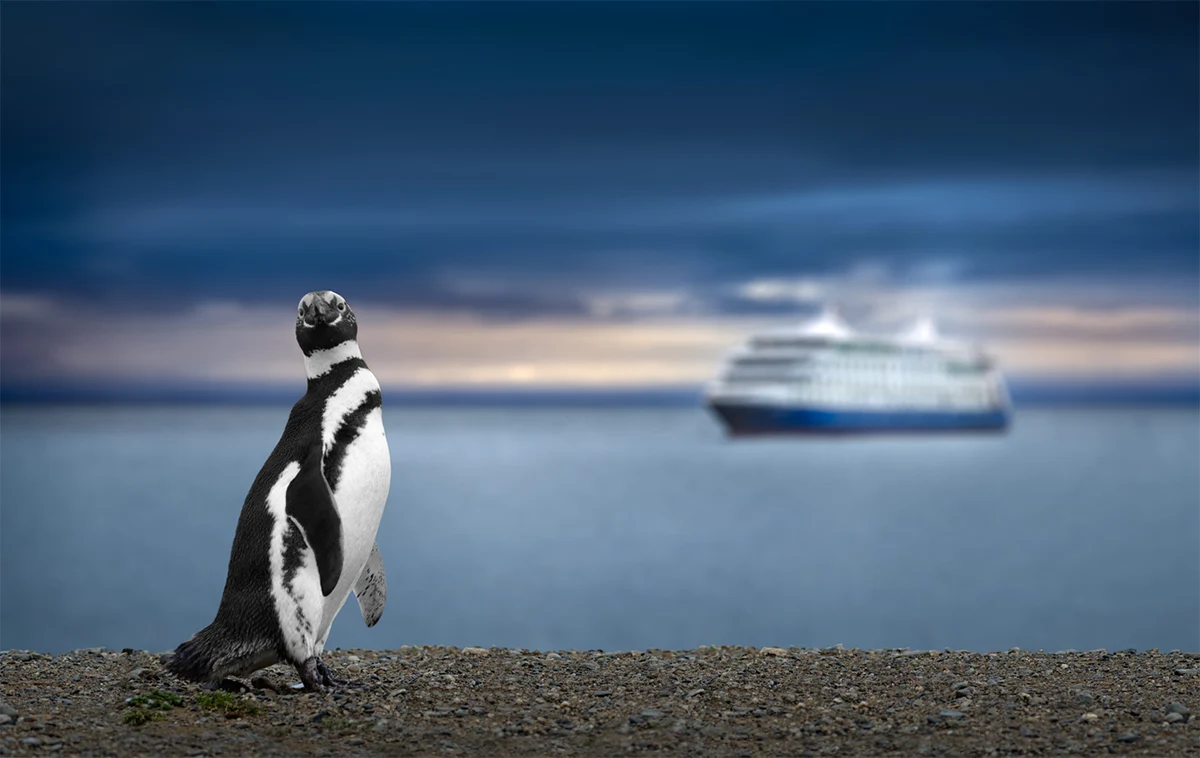
Popular expedition cruise destinations include Antarctica, the Arctic, the Galápagos Islands, Patagonia, Alaska, and remote regions of the South Pacific. Each offers distinct landscapes and experiences, from towering glaciers and polar wildlife to volcanic islands and pristine marine ecosystems.
What unites these destinations is their sense of remoteness and authenticity. Travelers are not simply visiting popular tourist attractions. They are entering environments that feel largely untouched by mass tourism, where the focus remains on observation, conservation, and responsible exploration.
What Daily Life Looks Like on an Expedition Cruise
Life aboard an expedition cruise follows a rhythm shaped by the environment. Each day typically includes guided excursions, educational programming, and time to observe the surrounding landscape.
Mornings often begin with briefings that outline planned activities and explain environmental conditions. Guests may then board small Zodiac boats to reach landing sites, participate in guided hikes, or observe wildlife in its natural habitat. Afternoons may include additional excursions, onboard lectures, or opportunities for photography and reflection.
Because expedition travel depends heavily on weather and environmental conditions, flexibility is essential. Itineraries may shift to take advantage of unique opportunities such as wildlife sightings or favorable conditions for exploration. This adaptability often leads to unexpected and memorable experiences that cannot be replicated through traditional travel.
The onboard atmosphere tends to be relaxed and intellectually curious. Travelers share a common interest in learning and discovery, creating a collaborative and engaging environment.
Leading Expedition Cruise Lines and What Sets Them Apart
Not all expedition cruise lines are alike. Each brand brings a distinct philosophy, fleet design, comfort level, and style of exploration. Understanding their differences is one of the most important steps in choosing the right journey. The brands below represent some of the most highly regarded options across a range of destinations and travel styles.
National Geographic-Lindblad Expeditions
National Geographic-Lindblad Expeditions is widely considered the pioneer of modern expedition cruising. The company traces its roots to 1966, when Lars-Eric Lindblad led the first non-scientific voyage to Antarctica, opening the continent to curious travelers for the first time. Today, the partnership with National Geographic brings scientists, photographers, archaeologists, and marine biologists aboard select departures, adding a layer of storytelling and expertise that is unique in the category.
The fleet of small ships, none exceeding 148 guests, covers destinations on all seven continents, including Antarctica, the Arctic, Alaska, the Galapagos Islands, Patagonia, Baja California, and the Pacific. All expedition excursions are included in the fare, along with tools for exploration such as kayaks, underwater cameras, and Hydrophones for listening to marine wildlife.
A certified photo instructor joins every departure, and National Geographic Photography Experts lead select voyages, making this line especially well suited for travelers passionate about wildlife photography. Lindblad is a strong fit for those who value deep educational programming and immersive naturalist-led experiences in an informal, adventurous atmosphere.
HX (Hurtigruten Expeditions)
HX, formerly known as Hurtigruten Expeditions, carries one of the most storied histories in polar travel, with roots dating back to 1896. Today the company operates a fleet of modern, hybrid-powered expedition ships that prioritize sustainability alongside exploration. Their flagship vessels, the MS Roald Amundsen and the MS Fridtjof Nansen, were among the first hybrid-electric expedition ships ever built, reducing carbon emissions significantly compared to conventional vessels of similar size.
HX itineraries span Antarctica, the Arctic, Greenland, Svalbard, Alaska, the Galapagos Islands, and the Northwest Passage, with more than 80 itineraries across five continents each season. Ships carry between 200 and 500 guests depending on the vessel, which makes the experience more accessible in terms of price while still offering genuine expedition programming, onboard science centers, and expert-led lectures.
HX is also one of the few expedition operators to actively offer family-focused voyages and children’s programs, and they have partnered with the University of Tasmania to expand Antarctic education programming. Their all-inclusive fare covers daily expeditions, alcoholic drinks, gratuities, and professional photographs, offering strong value within the expedition category.
Quark Expeditions
Quark Expeditions has specialized in polar travel since the early 1990s and is widely regarded as one of the most adventure-forward operators in the field. Their flagship vessel, the Ultramarine, is purpose-built for polar exploration and carries two twin-engine Airbus H145 helicopters, enabling access to remote landing sites and offering activities such as heli-hiking, flightseeing, and helicopter landings in locations that no other expedition operator can reach by ship alone.
Beyond helicopter excursions, Quark is known for the depth and variety of its off-ship adventure options, including kayaking, camping on polar ice, snowshoeing, and paddleboarding. Their expedition teams are experienced at operating in rapidly changing polar conditions and are skilled at maximizing exploration time regardless of weather. All voyages include complimentary Wi-Fi and a bar service.
Quark’s core destinations are Antarctica and the Arctic, with itineraries ranging from classic Antarctic Peninsula voyages to extended explorations of the Ross Sea, Greenland, Svalbard, and the Canadian Arctic. The company is best suited for physically active travelers who want more than observation and are ready to engage directly with some of the most extreme environments on earth.
Aurora Expeditions
Aurora Expeditions is an Australian-owned adventure travel company founded by mountaineer Greg Mortimer, one of the first Australians to summit Mount Everest, and his wife Margaret. Their approach combines serious expedition credentials with a warm, community-driven onboard atmosphere that consistently earns high marks from returning guests.
Their fleet of three purpose-built ships, the Greg Mortimer, the Sylvia Earle, and the newly launched Douglas Mawson (2025), all feature the distinctive Ulstein X-Bow design, which slices through swells rather than riding over them. Guests consistently report smoother transits through the Drake Passage and more restful nights at sea as a result. Each ship carries a maximum of 130 guests on expedition sailings, and the team-to-guest ratio is among the highest in the industry.
Aurora is a Certified B Corporation, reflecting a strong commitment to sustainability and citizen science. The Douglas Mawson’s inaugural season marks the company’s return to East Antarctica for the first time in 13 years, opening up new itineraries including retracing Sir Douglas Mawson’s historic expedition route. Aurora is an excellent choice for travelers seeking an intimate, values-driven expedition experience with deep Antarctic expertise.
Antarctica21
Antarctica21 pioneered the Antarctic air-cruise format in 2003 and remains the category leader today. Rather than enduring the notoriously rough two-day crossing of the Drake Passage, guests board a two-hour chartered flight from Punta Arenas, Chile, to King George Island in the South Shetland Islands, where they step directly aboard their expedition ship. The result is more time exploring Antarctica and less time at sea.
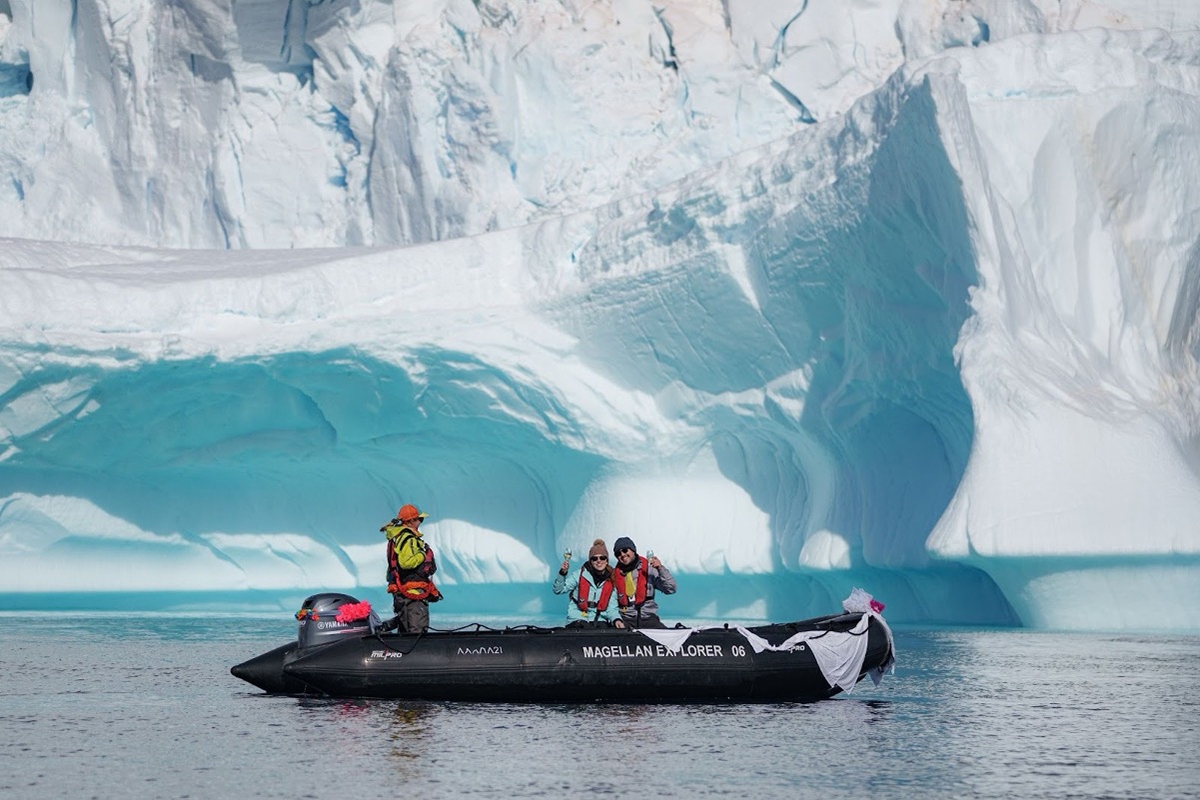
Their boutique vessels carry a maximum of 76 guests per voyage, and because of the small size, all passengers can disembark simultaneously for Zodiac landings rather than going ashore in rotation groups. This gives Antarctica21 guests considerably more time ashore than passengers on larger ships. The expedition team maintains a 1:6 guide-to-guest ratio, ensuring a highly personal experience.
The Magellan Explorer is the world’s first ship purpose-built specifically for Antarctic air-cruises, and a second vessel, the Magellan Discoverer (hybrid-electric, Polar Class 6), is entering service in 2026. Antarctica21 is the ideal choice for travelers who want to maximize their time in Antarctica, prefer a boutique experience, or have concerns about seasickness on the Drake Passage.
UnCruise Adventures
UnCruise Adventures is a US-based small-ship operator specializing in expedition-style cruising through some of North America’s most spectacular coastal wilderness. Their core destinations include Alaska’s Inside Passage, Glacier Bay National Park, the Pacific Northwest, Baja California, Hawaii, and Costa Rica, with vessels carrying between 22 and 90 guests depending on the itinerary.
What sets UnCruise apart is its emphasis on active, hands-on exploration. Each day guests choose from kayaking, skiff tours, hiking, bushwhacking, paddleboarding, and snorkeling, with small group excursions typically led by a dozen or so guests at a time. The approach feels more like a private wilderness expedition than a traditional cruise. All vessels are US-flagged, which allows the company to operate itineraries that do not require foreign port stops and can navigate narrow waterways and remote inlets that larger ships cannot access.
UnCruise is particularly well suited for active travelers who want an immersive Alaska or Pacific Coast experience, families looking for wildlife-rich adventures, and those who prefer the intimacy of a small community at sea. Their all-inclusive fare covers excursions, meals prepared from farm-to-table regional ingredients, and an open bar.
Aqua Expeditions
Aqua Expeditions brings a distinctly luxurious lens to expedition cruising, with a focus on destinations that reward travelers willing to venture beyond conventional itineraries. In the Peruvian Amazon, they operate two intimately scaled river ships: the Aqua Nera, a 20-suite vessel drawing design inspiration from the Amazon’s mystical black water lagoons, and the Aria Amazon, a 16-suite classic explorer with floor-to-ceiling windows framing the rainforest at every turn.
Cuisine is central to the Aqua Expeditions experience. Chef Pedro Miguel Schiaffino, one of Peru’s most acclaimed culinary figures, creates the menus aboard both Amazon vessels, using native Amazonian ingredients to deliver a genuinely regional dining experience. Expert naturalist guides lead twice-daily excursions in small groups, taking guests deep into the Pacaya-Samiria National Reserve in search of pink river dolphins, black caimans, spider monkeys, sloths, and anacondas.
Beyond the Amazon, Aqua Expeditions also operates in Southeast Asia aboard the Aqua Mekong (Mekong River, Cambodia and Vietnam) and in the Arctic and East Africa aboard the Aqua Lares, an icebreaker-class superyacht. The company is widely regarded as the benchmark for luxury in remote river and wilderness cruising, and is a natural fit for travelers who want genuine expedition access paired with outstanding food, personalized service, and refined design.
Different Styles of Expedition Cruising
Expedition cruising is not a single standardized experience. Ships and operators vary widely in comfort level, activity intensity, and overall atmosphere. Some journeys emphasize rugged exploration, while others combine remote access with luxury accommodations and refined service.
Adventure-focused expeditions may include physically demanding activities such as kayaking, extended hiking, or polar excursions. Luxury expedition cruises offer spacious suites, high-end dining, and wellness facilities while still providing access to remote destinations. Educational or research-focused voyages place greater emphasis on scientific learning and cultural understanding.
Understanding these differences is essential when selecting an expedition cruise, as the overall experience can vary significantly depending on the operator and itinerary.
Who Expedition Cruising Is Best For
Expedition cruising appeals to travelers who value meaningful experiences over convenience and discovery over entertainment. It is particularly well suited for nature enthusiasts, photographers, culturally curious travelers, and those seeking once-in-a-lifetime experiences.
This style of travel also attracts travelers interested in sustainability and conservation, as many expedition operators prioritize responsible tourism and environmental protection. The experience rewards curiosity, flexibility, and a desire to engage deeply with the world.
Travelers who prefer highly structured schedules, extensive nightlife, or large-scale entertainment may find traditional cruises more aligned with their expectations. Expedition cruising is best suited for those who view travel as an opportunity for learning and exploration.
Is Expedition Cruising Right for You?
Determining whether expedition cruising is the right choice depends on travel priorities. Travelers seeking immersive experiences, remote environments, and intellectual engagement often find expedition travel deeply rewarding. The opportunity to explore extraordinary places while learning from experts creates a travel experience that feels both enriching and transformative.
However, expedition cruising requires openness to changing conditions and active participation. Weather-dependent schedules, physically engaging excursions, and remote environments are part of the experience. For many travelers, these elements enhance the journey by creating authentic and memorable moments.
Plan Your Expedition Cruise with Tray Tables Up
Choosing the right expedition cruise involves more than selecting a destination. Differences in ship style, comfort level, exploration intensity, and itinerary design can significantly shape the overall experience. Expert guidance ensures that each journey aligns with your travel goals, preferences, and expectations.
Tray Tables Up provides personalized support in selecting expedition cruises, comparing destinations, and securing exclusive benefits and preferred accommodations. Whether planning a polar journey, wildlife-focused expedition, or remote island exploration, each itinerary is thoughtfully tailored to create a seamless and meaningful experience.
Contact Tray Tables Up to begin planning an expedition cruise designed around your interests, travel style, and sense of adventure.