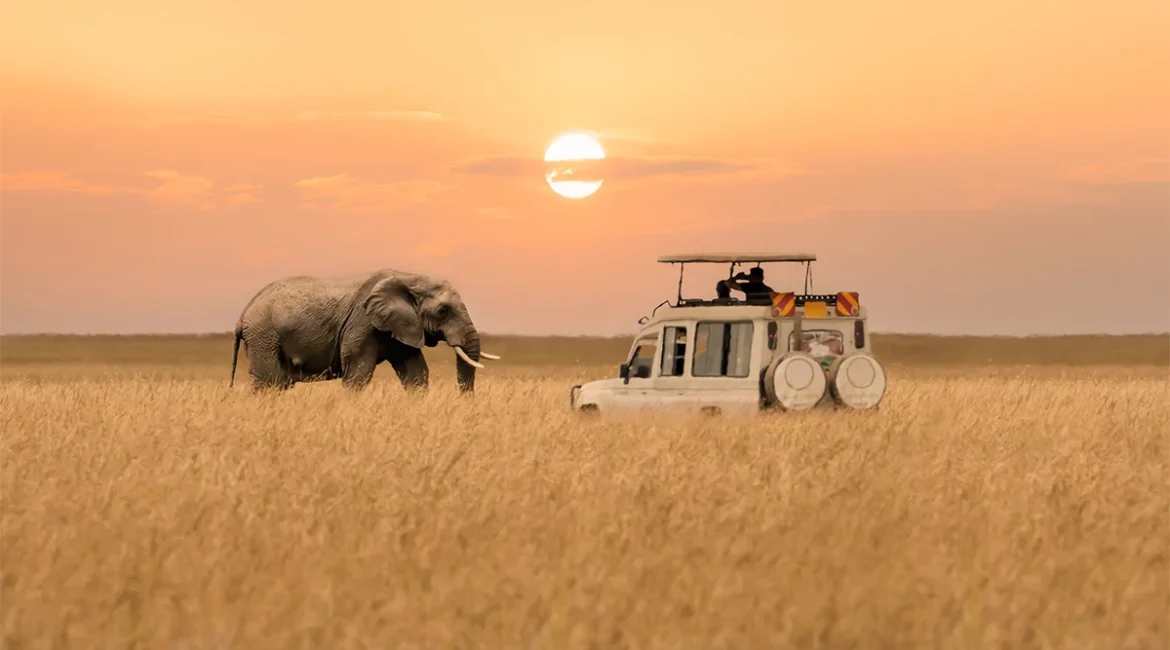
This is the first question I work through with almost every traveler planning a safari in Africa. When most people picture a safari, they see the experience: the wildlife, the open vehicle, the vast landscape. What they rarely think about is where that experience takes place, and how much that choice shapes everything else. Private reserves and national parks can sit side by side on a map and deliver completely different safaris. If you did not know that was a thing to consider, you are not alone. Here is the full picture.
What Actually Separates Them
The distinction between a private game reserve and a national park sounds administrative but is felt immediately and viscerally on the ground.
A national park is publicly managed government land, open to all visitors who pay the entry fee. There are no restrictions on the number of vehicles at a sighting. Game drives follow designated roads. Night drives and off-road driving are typically prohibited. The lodges and camps inside national parks range from basic tented camps to more comfortable options, but they operate within the constraints of public land. That said, national parks are where the sheer scale of African wildlife hits you. Iconic destinations, abundant game, and a range of price points make them the natural starting point for many first-time safari travelers.
A private game reserve is land under private conservation management, either adjacent to a national park or standing alone, with a limited number of lodges permitted to operate within it. Those lodges have exclusive traversing rights: only their vehicles are allowed on the reserve. Game drives go off-road when needed to follow wildlife. Night drives are standard. There are rules about how many vehicles can be at a sighting simultaneously, enforced by radio communication between guides, which prevents the cluster of twenty Land Cruisers around a lion that has become the defining image of high-season Masai Mara or Kruger.
Those differences, exclusive access versus shared access, off-road versus road-bound, night drives versus daylight only, produce experiences that are comparable in the way that economy and business class are comparable: technically the same journey, practically a different world.
The Case for Private Reserves
The Guide Relationship
The single greatest advantage of a private reserve safari is the guide, and I cannot overstate this. In a private reserve, your guide works for your lodge exclusively. They know the reserve intimately. They have tracked the same leopard family for years and know where she dens. They recognize individual lion pride members by sight. They understand the seasonal patterns of the reserve well enough to anticipate wildlife behavior rather than simply responding to it.
The guide relationship in a private reserve is also personal in a way that national park guiding rarely is. You have the same guide for every drive, typically three per day, which means they learn what you care about, what you want to stop and observe, and how you prefer to spend your time in the bush. That relationship deepens over the course of three or four days and produces a quality of experience that goes well beyond wildlife sightings.
The travelers who come back from private reserve safaris most transformed are almost always the ones who describe their guide in the same breath as the wildlife. They do not say ‘we saw lions.’ They say ‘Michael found a pride of twelve lions at dawn and we watched them for two hours.’ The guide is the experience.
Exclusivity on the Ground
In a private reserve, the bush belongs to your lodge’s vehicles and the handful of other lodges with traversing rights. On a morning drive in the Sabi Sand, you might encounter two or three other vehicles at a major sighting. In Kruger National Park on a busy day, the same sighting might attract thirty or forty vehicles.
The difference is not merely aesthetic. It affects how wildlife behaves, how long they stay at a sighting, and what you are able to observe. A leopard that tolerates three respectful vehicles behaves differently from one surrounded by a crowd. The intimacy of the private reserve encounter is not a luxury add-on. It is a different category of wildlife experience.
Night Drives and Walking Safaris
Night drives are standard on private reserves and prohibited in almost all national parks. The nocturnal bush is a different world from the daytime one. Leopards, lions, civets, genets, aardvarks, honey badgers, and a range of smaller predators that rest during the day become active after dark. A spotlit leopard carrying prey up a tree is one of those experiences that travelers who have had it describe in detail years later.
Walking safaris are offered by many private reserves and by a smaller number of specialist national park concessions. Walking with a guide and an armed ranger through the bush, interpreting tracks and signs and insect life that a vehicle-based safari passes without noticing, produces a connection with the landscape that game drives cannot replicate. The scale of Africa becomes comprehensible on foot in a way it does not from a vehicle.
The Lodge Experience
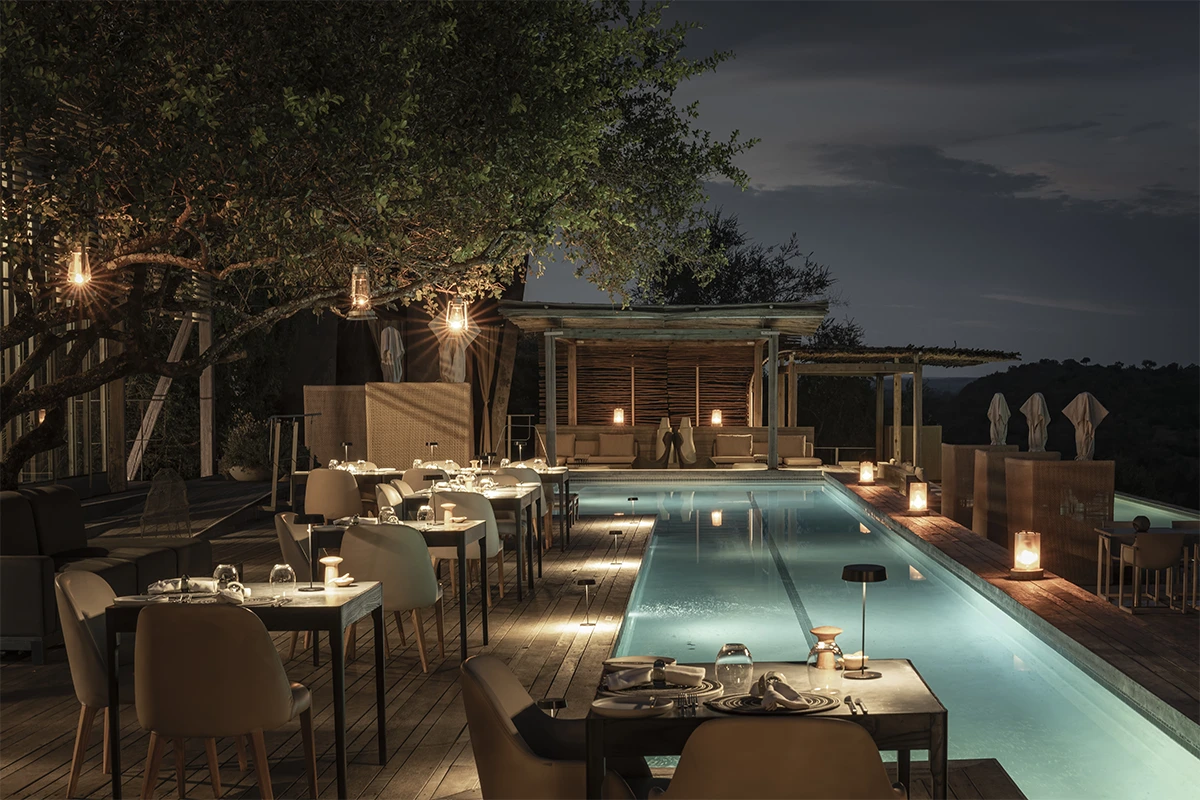
Private reserve lodges are typically among the finest accommodation experiences in Africa, and the best of them operate at a standard that matches any luxury property in the world while existing in complete immersion in the bush. Waking to the sound of lions calling across the darkness, having an elephant walk through the camp at breakfast, sitting at a fire under southern hemisphere stars after a night drive: these are experiences that the lodge setting delivers in a way that standard national park accommodation, however comfortable, rarely does.
The food and service at the leading private reserve lodges, properties like Singita Sabi Sand, &Beyond Phinda, and Wilderness Safaris’ portfolio in Botswana, are consistently at a level that travelers who have stayed at comparable properties elsewhere describe as genuinely surprising. The combination of bush immersion and hospitality excellence is not a contradiction in these places. It is the product of many years of refinement.
Worth noting is that a small number of private concessions within national parks deliver a similar caliber of experience. Singita Lebombo Lodge, situated within Kruger National Park on a 33,000-acre private concession, is one of the best examples: off-road driving, night drives, and lodge standards that rival the finest private reserves, all within the boundaries of one of Africa’s great national parks. It is the exception that proves the rule, and it is the kind of option I look for when a traveler specifically wants Kruger but does not want to compromise on the quality of the experience.
The Case for National Parks
Private reserves are not the right choice for every traveler, and I try to be direct about where national parks genuinely compete or win.
Scale and Landscape
The great national parks of Africa, the Serengeti, the Masai Mara, the Okavango Delta, Kruger, the Ngorongoro Crater, exist on a geographic scale that private reserves cannot match. The Serengeti alone covers nearly fifteen thousand square kilometers. The wildebeest migration, which moves across the Serengeti and into the Mara across Tanzania and Kenya, is a phenomenon that plays out across distances that no private reserve can contain.
For travelers who specifically want to witness the migration at scale, who want to see the river crossings at the Mara River with thousands of wildebeest and the chaos that follows, the national park setting is not just acceptable. It is required. No private reserve delivers the migration in the same way.
Budget
Private reserve lodges are expensive. The premier properties in the Sabi Sand or Botswana run $1,000 to $2,000 or more per person per night, all-inclusive of drives, meals, and activities. National park accommodation, including some well-run tented camps and lodges inside or adjacent to the parks, offers a genuine safari experience at a fraction of that cost.
For travelers with a fixed budget who want to maximize nights in the bush, a national park based safari may deliver more time on the ground for the same investment. The experience per drive is different, but the cumulative wildlife encounters over a longer stay can be compelling.
Self-Drive Safaris
Self-drive safaris in national parks, particularly in Kruger and in several southern African parks, are a genuine and rewarding form of safari for the right traveler. The independence of moving at your own pace, making your own decisions about where to go and how long to stay, appeals to travelers who prefer control over their itinerary. Self-drive in Kruger produces memorable encounters and is a fraction of the cost of a private reserve stay.
It is not, however, the same experience as being guided by someone who has spent years learning a specific reserve. The knowledge differential is significant and its effects are felt in every drive.
The Combination Approach
The best African safari itinerary for many travelers is not a binary choice but a sequence. A few nights at a national park or on a self-drive, for context and scale, followed by three or four nights at a private reserve, for depth and intimacy, produces a trip that offers both the grand landscape and the personal encounter.
In practice, this might look like two nights in the Serengeti for the migration context, followed by three nights at a Sabi Sand reserve for the guide relationship and nocturnal experience. Or a self-drive day in Kruger National Park followed by three nights at a lodge in the adjacent Sabi Sand, where you share the same wildlife but experience it entirely differently.
The question I most often ask travelers who are undecided is: what do you want to feel at the end of the last drive? If the answer involves a sense of having gone deep into something specific and personal, a reserve where the guide knew the animals by name and the bush felt like it belonged to you, that is a private reserve. If the answer involves the scale of the African landscape and the feeling of being inside one of the great natural phenomena on earth, the parks have their own answer.
What I Look for When Recommending a Reserve
When a traveler comes to me planning a safari, the private versus national park question is only the beginning of the conversation. Within the private reserve category, the variation between properties is enormous, and matching the right reserve to the right traveler is work that requires knowing both well.
The region matters: the Sabi Sand in South Africa, the Okavango in Botswana, the Laikipia Plateau in Kenya, the Luangwa Valley in Zambia are all private reserve environments with completely different wildlife rosters, landscapes, and experiences. The time of year matters: the Okavango at high water is a completely different experience from the Okavango in the dry season. The lodge matters: two properties with traversing rights on the same reserve can deliver very different experiences depending on guide quality, lodge culture, and the standard of the food and accommodation.
Through my Fora and Virtuoso partnerships, I have access to the operator relationships and property knowledge that make these distinctions legible. Choosing a private reserve safari is not a decision that benefits from a general recommendation. It benefits from specific knowledge applied to specific travelers, which is exactly what the planning process is for.
Contact me today to start planning your African safari. Whether the right answer is a private reserve, a national park, or a combination of both, the conversation starts with understanding exactly what you are looking for from the experience.