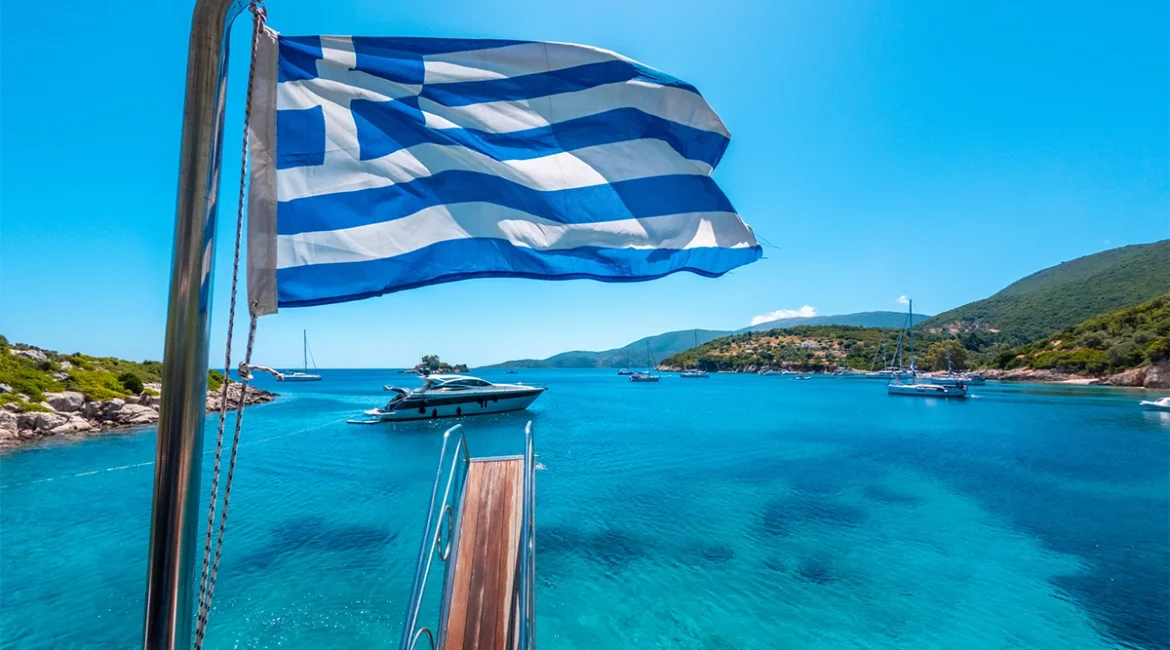
This is the first question almost every traveler asks me, and it is also the question with the most unsatisfying honest answer: it depends. But that answer is only unsatisfying if you do not understand what it depends on. Once you do, the cost of a Greek yacht charter becomes very legible, and in many cases, more reasonable than people expect.
Through my affiliations, I work closely with charter operators and brokers across the Greek islands, and what I hear consistently is that cost surprises catch first-timers off guard more than anything else. This guide lays out exactly what you will pay, why, and how to make sure you are getting genuine value.
Pricing varies more than most people expect, so I want to be upfront: the figures in this guide reflect what I actually see in the market through my Fora and Virtuoso charter partnerships. They are representative, not fixed. Every charter I book comes with a full, transparent cost breakdown before anything is signed.
The Core Cost Structure
A Greek yacht charter is not a single price. It is a bundle of components, and understanding each one separately is the only way to budget accurately.
1. The Charter Fee
Charter fees vary enormously based on vessel type, size, age, condition, crew quality, and season. Here is a general framework based on current market rates:
| Vessel Type | Charter Fee (approx.) |
|---|---|
| 78′ Motor Yacht (4 – 6 guests) | US$60K+ |
| 88′ Motor Yacht (10 – 12 guests) | US$80K+ |
| 55 Meter Boat (12 – 14 guests) | €320K |
These are weekly rates. Most charters run Saturday to Saturday, though some operators offer flexible start days in shoulder season.
2. APA: Advance Provisioning Allowance
The APA is one of the most misunderstood parts of charter pricing, and it catches first-timers off guard more than anything else. It is an upfront deposit, typically 30-35% of the charter fee, that covers all running expenses during the week: fuel, food and drinks onboard, mooring and port fees, and local taxes.
The APA is not a fixed cost. It is an estimate. At the end of the charter, the captain presents a full accounting of how the APA was spent. If you spent less, you get the difference back. If you spent more (which happens when guests are generous with themselves on fuel-heavy motor yachts or premium provisions), you pay the balance.
On a $60,000 charter fee, budget an APA of $18,000 to $25,000. That is real money, and it belongs in your planning from day one. I always walk my travelers through this before they see the first vessel option.
3. Crew Gratuity
Tipping the crew is standard practice and expected. The conventional range is 10 to 20% of the charter fee, paid at the end of the week in cash. The remaining APA can also be used to cover the crew tip.
A crew that delivers an exceptional week earns every bit of it. A captain who finds the perfect anchorage every night, a hostess who remembers that one guest does not eat shellfish and quietly adjusts every meal without being asked: these are the people who make a charter genuinely extraordinary. I always remind my travelers to tip based on the experience they actually had, not the minimum.
4. Flights and Pre/Post Accommodation
Getting to Greece is a separate line item, but it belongs in the charter budget conversation. Most charters originate from Athens (Piraeus or Lavrion marinas), Corfu, or Rhodes depending on the route.
I strongly recommend building in two nights in Athens before the charter and one night after. Athens is a magnificent city that deserves more than a transfer, and the buffer protects you against flight delays. 5. Extras Onboard and Ashore
Dining ashore at a harbor taverna, water toys beyond what the boat carries, spa treatments in port, a day trip by land: these are all outside the APA and outside the charter fee. They are easy to forget in the budget and easy to overspend on if you are not paying attention. A reasonable estimate is $200 to $500 per person per day for extras, depending on your group’s appetite for spending ashore.
What Drives the Price Up
Once you understand the base structure, the variables that move the number significantly are:
- Vessel type: Motor yachts cost more than sailing yachts, primarily because of fuel. A sailing yacht in a good breeze uses almost no fuel. A motor yacht running all day can burn through a meaningful portion of the APA in fuel alone. This is not a reason to avoid motor yachts, but it is a reason to understand the trade-off.
- Season: July and August command the highest rates across all vessel types. If you have any flexibility, late May, June, or September offer better value.
- Vessel age and specification: A brand-new yacht with a full water toy package, air conditioning in every cabin, and a high-spec interior costs more than a five-year-old equivalent. This is an important consideration for travelers and can be a big driver in costs.
- Crew size: Larger vessels with bigger crews (a captain, chef, hostess, and deck hand) carry higher base fees. The service level is correspondingly higher. For groups of eight or more, the per-person cost difference often narrows considerably.
- Route and distance: Longer routes that cover more water consume more fuel, which comes out of the APA. An itinerary that stays within a compact island group is more fuel-efficient than one that makes long open-water crossings.
How to Get the Most Value
A few principles I apply when helping travelers maximize what they get for their budget:
- Travel in shoulder season: September into early October is my strongest recommendation for value. The rates are lower than August, the weather is excellent, the sea is warm, and the islands are noticeably less crowded. You get a better experience for less money.
- Prioritize crew over vessel: A slightly older boat with an outstanding captain and chef will outperform a brand-new yacht with an average crew every time. I never recommend a vessel without vetting the crew first.
- Be honest about group size: A larger group lowers the per-person cost significantly. If you are considering a charter for four, it is worth asking whether two more friends would want to join. The math changes substantially.
- Work with an advisor: Charter brokers and advisors have access to positioning deals, last-minute availability, and preferred rates that are not published publicly. My Fora and Virtuoso relationships mean my travelers are not paying rack rate, and they receive added amenities that are not available when booking direct. My planning services come at no additional cost on charter bookings.
Planning Your Greek Yacht Charter with Tray Tables Up
If you are trying to figure out what a charter would actually cost for your specific group, dates, and preferences, the most useful thing I can do is run the numbers with you directly. Every charter is different, and a conversation takes fifteen minutes but saves weeks of confusion.
Contact me today to get your Greek yacht charter planning started.