There’s a moment that happens to almost everyone who visits Provence in high season, and it usually happens in Gordes. You’ve seen the photo a hundred times: the honey-colored village stacked up a hillside, looking like something out of a fairy tale, the kind of place that keeps landing on “most beautiful village” lists. So you drive up expecting quiet and charm, and instead you find a parking lot that took twenty minutes to get out of, a main street shoulder-to-shoulder with tour groups, and a version of “authentic Provence” that’s really just a very beautiful stage set.
I don’t say this to knock Gordes. It’s stunning, and it earned its fame honestly. But somewhere along the way, I started wondering what Provence looked like in the towns nobody was fighting to see. So I started driving past the famous names and into the smaller roads, the ones that wind up into the hills without a tour bus in sight.
What I found were villages with the same bones as their famous neighbors: the stone, the light, the impossibly narrow streets, but with room to actually breathe in them. Here are four that stuck with me.
Oppède-le-Vieux: A Village That Locals Never Left Behind
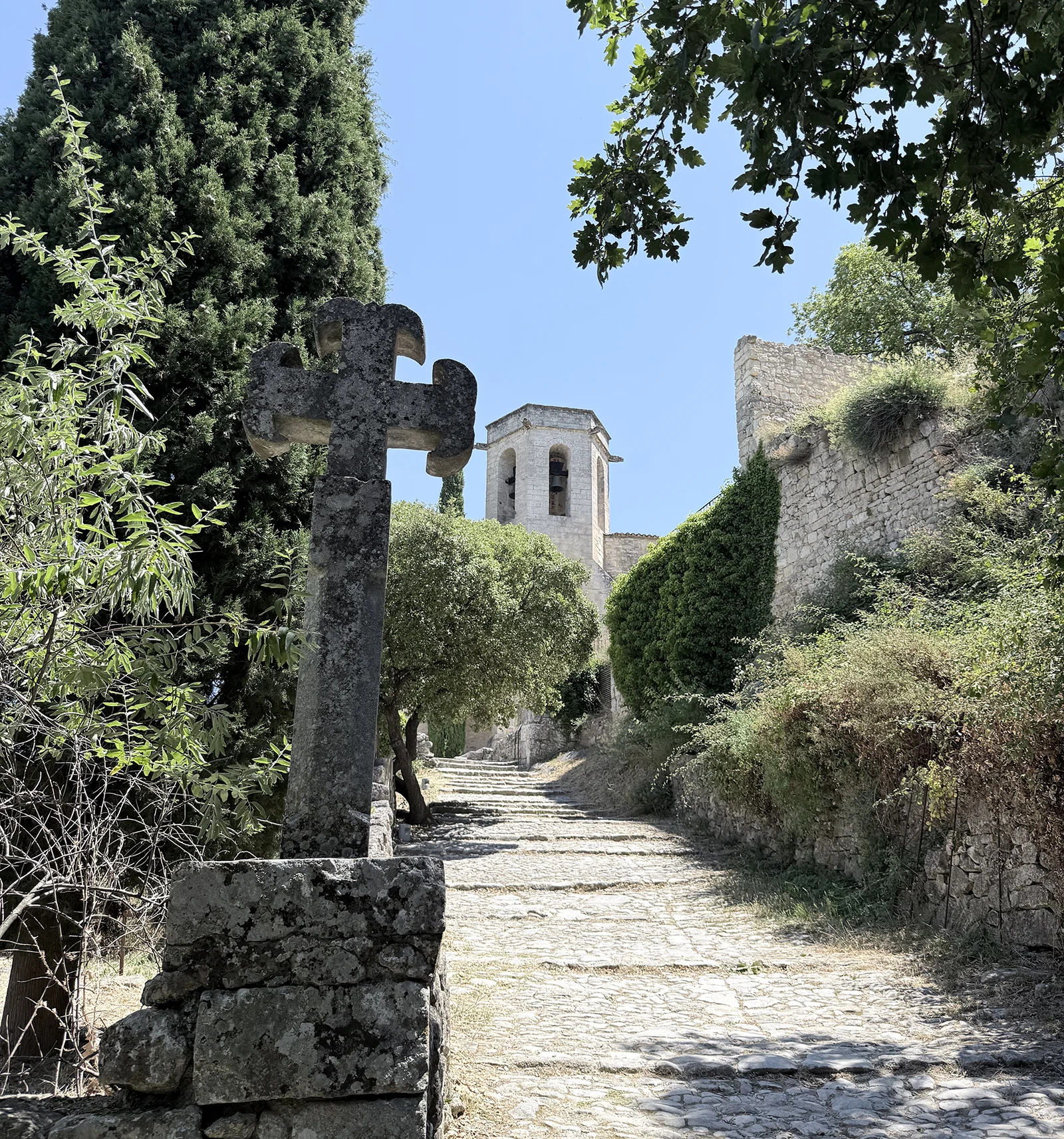
Oppède is really two villages. There’s the newer one down in the valley, and then there’s Oppède-le-Vieux, old Oppède, which climbs up a rocky outcrop toward a ruined hilltop castle and a Romanesque church that looks like it grew straight out of the stone. Much of the old village was abandoned by the mid-20th century, and walking up through it now still has that feeling: half-restored houses, ivy working its way over old walls, and a stillness that made us lower our voices without meaning to.
We made the climb up to the castle ruins ourselves, short but steep, and it was worth every step for the view alone: rolling farmland and vineyards stretching out toward the Luberon in one direction, the village rooftops tumbling below us in the other. There was almost no signage, no gift shop at the top, just wind and old stone and a long way to look.
Down in the newer part of the village, we had lunch at Bistro Les Poulivets, sitting on a shaded patio surrounded entirely by locals: multi-generational families out for a long, unhurried Sunday lunch, old friends catching up over wine. Nobody was rushing, nobody was checking a guidebook. We were clearly the outsiders at the table next door, and it was one of the best meals of the trip.
Lacoste: Art, History, and a View Across to Bonnieux
Lacoste has a different kind of energy than the other villages on this list, mostly because of one institution: SCAD, the Savannah College of Art and Design, runs a campus here, tucked into the old village. As we wandered the streets, we kept coming across experiential art installations dotted around the village, student work tucked into old doorways and courtyards where you’d least expect it. It gave Lacoste a quiet creative pulse that we hadn’t found in the other Provençal hill towns: students sketching in doorways, small galleries, a sense that the village is lived-in rather than preserved behind glass.
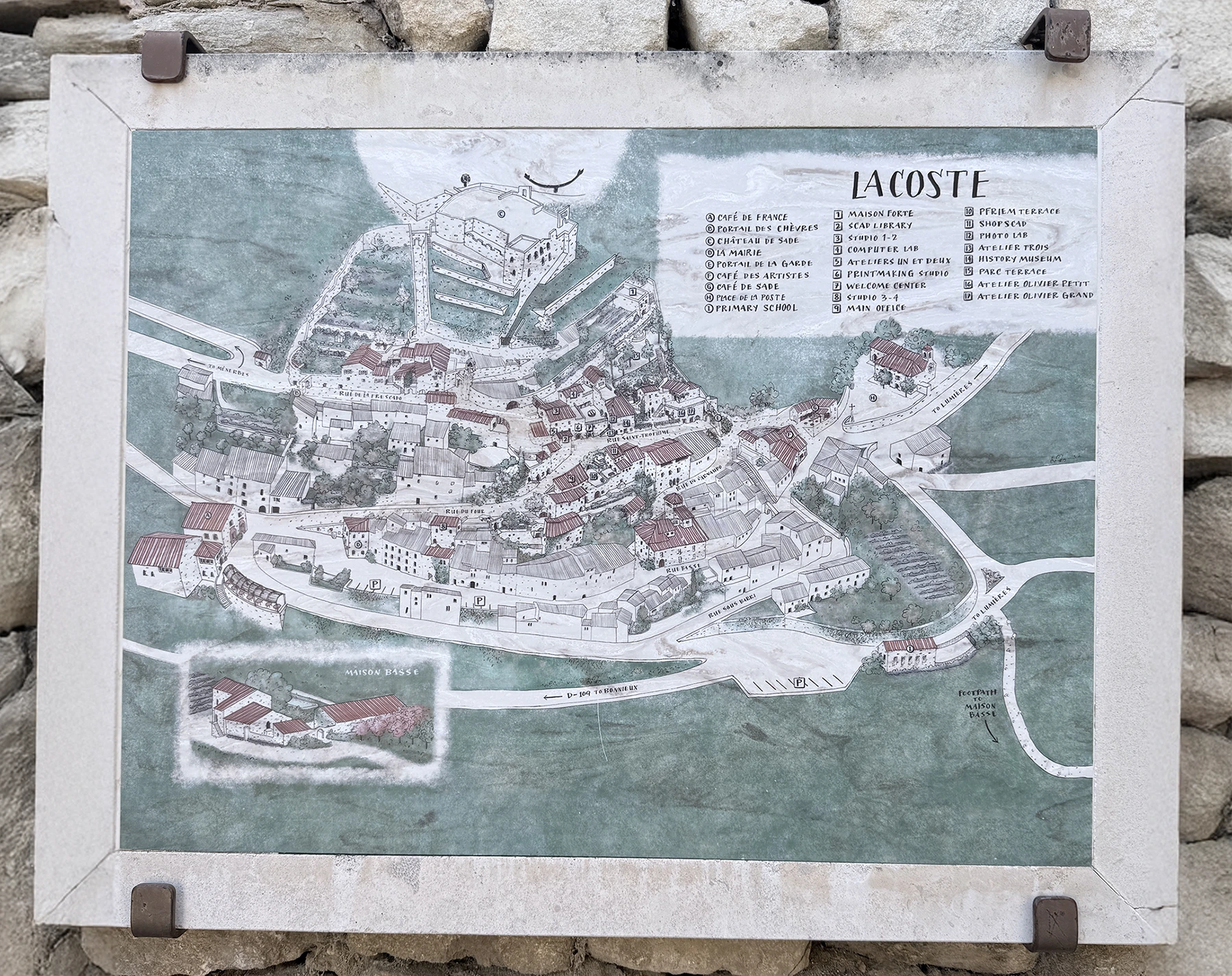
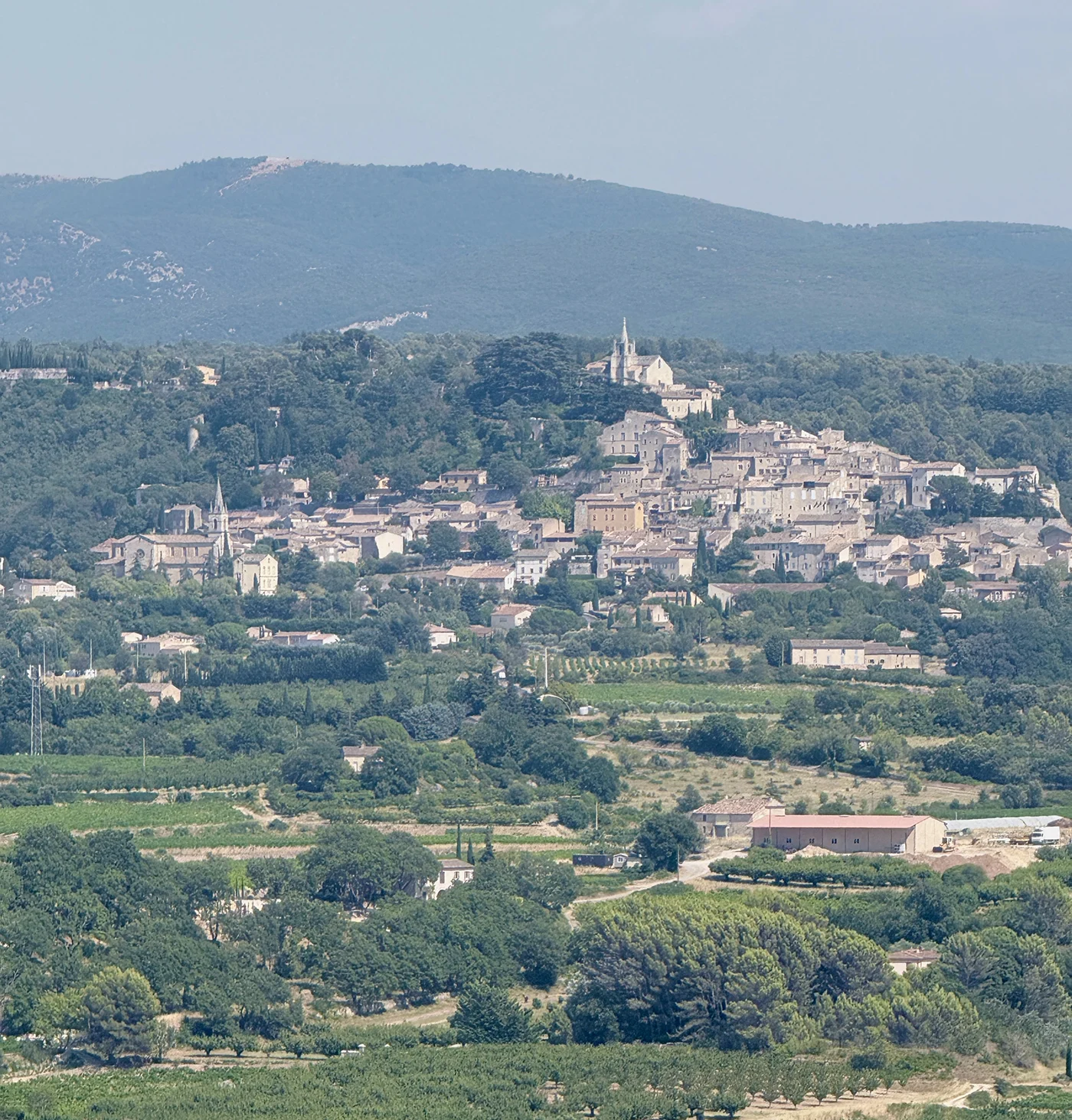
Looming over all of it is the ruined Château de Lacoste, once owned by the Marquis de Sade, whose family held the estate for centuries. We walked up through the village streets to reach it, past stone houses with ochre-colored shutters and views that opened up suddenly at the top of every switchback. From up there, we looked across the valley and spotted another stunning hill village, Bonnieux, rising on the opposite slope, one more reason we ended up lingering longer than planned.
Gargas: An Ochre Landscape and a Workshop That Restored Notre-Dame
Gargas isn’t a secret exactly, it’s just not somewhere most people have on their list. We almost didn’t stop either. The countryside around it rolls with vineyards and ochre-streaked hills; this is ochre country, the same red-and-gold mineral earth that gives nearby Roussillon its famous cliffs.
What pulled us in was a chandelier workshop called Mathieu Lustrerie, which we stumbled into mostly by accident. We had no idea what we were walking into. The atelier restores and crafts chandeliers by hand, and it turns out they were the ones trusted with restoring the chandeliers inside Notre-Dame after the 2019 fire. We only learned that once we were already inside, looking around at the tools and the work in progress, and it took a moment to fully land. It’s not the kind of thing you expect to find in a village this size. That’s the thing about going off-script in Provence. You never quite know what’s behind the next door.
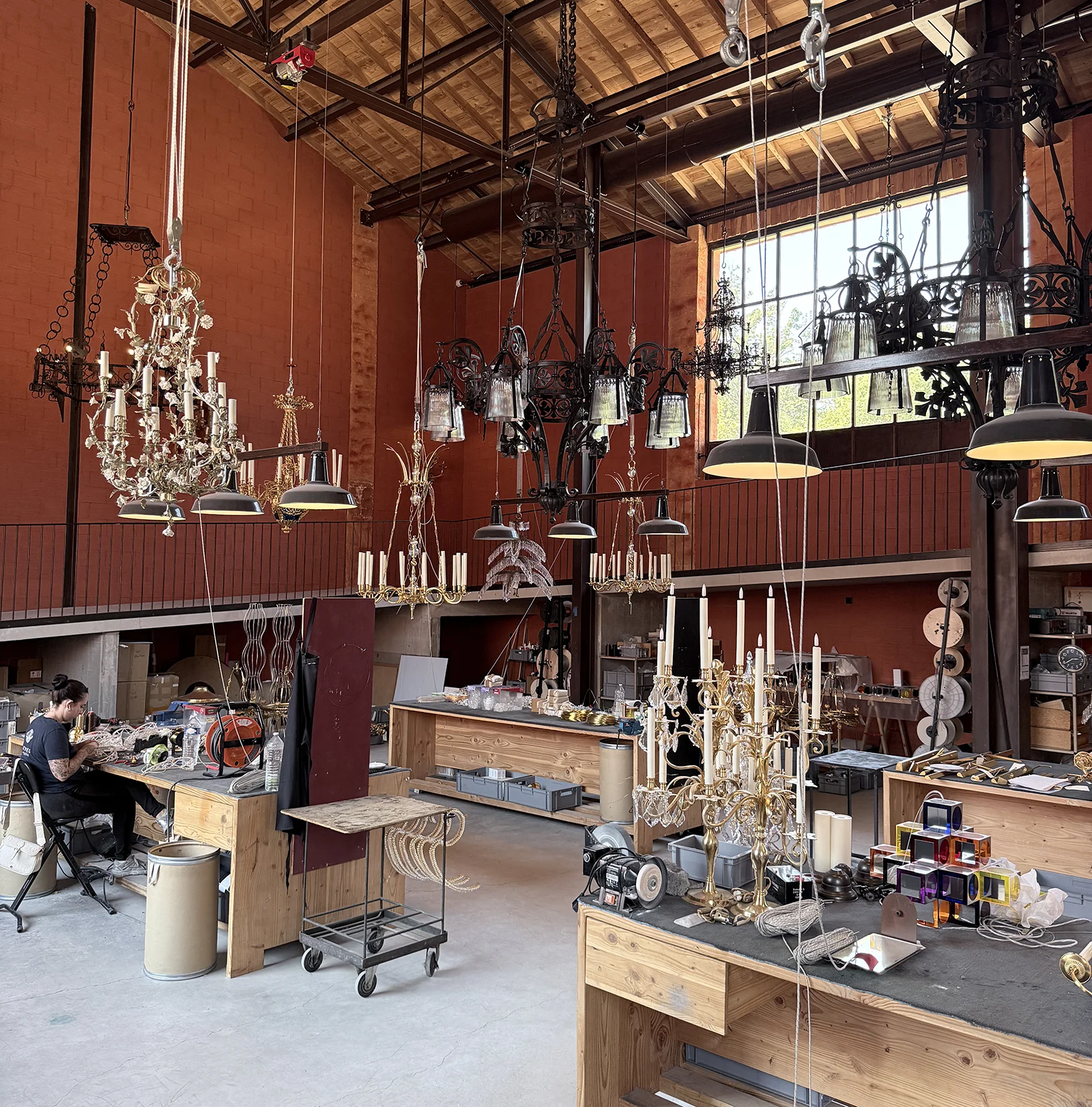
Gargas also happens to have one of the best restaurants of the whole trip: La Chape, which has a big, breezy outdoor courtyard with a small play structure for kids running around between courses. We liked it so much we went back twice, once for lunch, once for dinner, just to sit in that courtyard a little longer. Like Oppède, it was full of locals, not a single other tourist in sight.
Sault: Lavender Season, Just a Little Later and a Lot Quieter
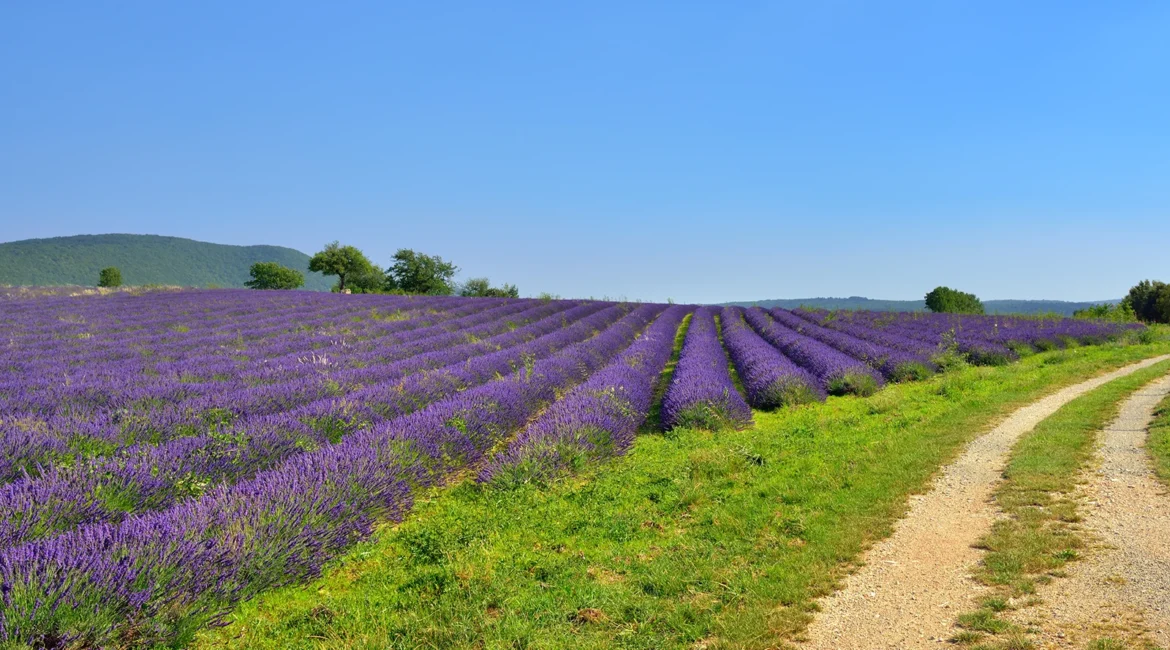
If you’ve timed a Provence trip around lavender fields, you’ve probably heard of the Valensole plateau, and you’ve probably seen the crowds that come with it. Sault offers the same electric-purple fields with a fraction of the traffic, for a simple reason: it sits at a higher altitude than most of the famous lavender towns, so its fields typically bloom later in the season.
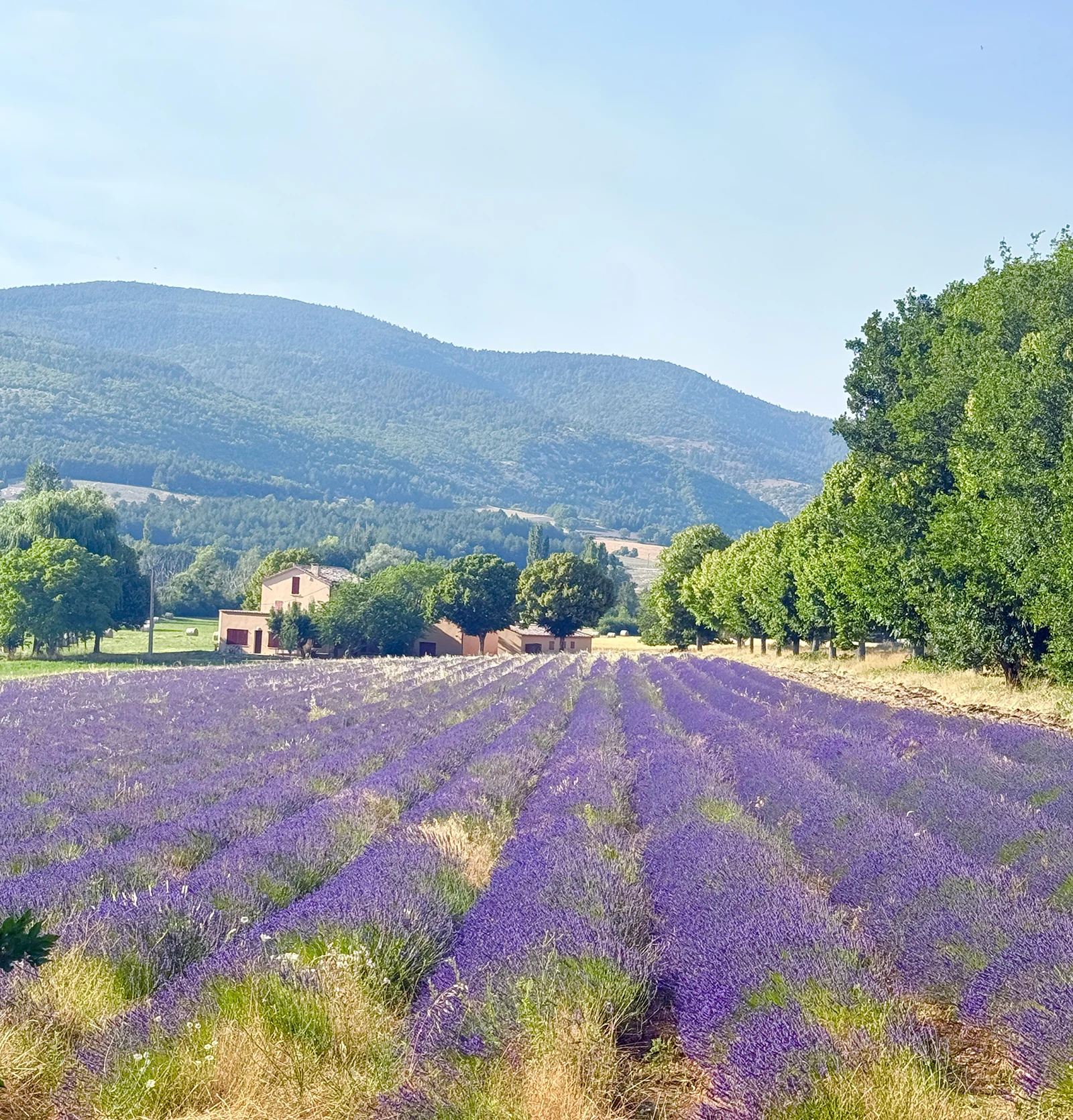
That gap in timing turned out to matter more than we expected. We visited in mid-July during an unusual heat wave that hit Provence, and the early heat had pushed the lavender at lower-altitude spots like Valensole well past its peak before we’d even arrived. Sault’s higher elevation bought it a little more time, and we caught fields still in full color there while other travelers were finding cut, brown stalks down in the valley. It’s worth keeping in mind if you’re planning a lavender trip: altitude can be your buffer against an early bloom, but a hot enough season can compress that window everywhere, so it pays to check current bloom reports rather than relying on the usual calendar.
Getting there was its own small adventure. We climbed steadily out of the valley on a winding road, up through hills and forest, before Mont Ventoux came into view, looming pale and bare-topped in the distance. By the time we rolled into the village, we’d gained enough altitude that the air felt noticeably cooler.
And then there was almost nobody there. Sault is a genuinely sleepy town; even in the height of summer, we walked through streets with barely another person in sight, let alone another tourist. We found a small local pizzeria, grabbed a few slices, and ate them sitting among locals who seemed mildly amused, in a friendly way, that we’d found the place at all.
The Provence Most Visitors Never Find
None of these villages are secrets in the sense that no one has ever heard of them. But they’re the towns you have to choose to seek out, rather than the ones that show up first when you search “best villages in Provence.” That difference matters. It’s the difference between snapping a photo in a crowd and actually sitting still long enough to notice the light change on old stone, or the difference between eating near tourists and eating among the people who actually live there.
Provence’s fame is well-earned. But so is the quieter version of it: the one where you can still hear your own footsteps on a village street, and the person next to you at lunch is a local, not another visitor with the same guidebook open on the table. That’s the Provence we went looking for, and the one we found.
Planning a Provence Trip That Goes Beyond the Obvious
Provence rewards the traveler who is willing to drive past the famous names and see what is on the smaller roads. The villages above are a starting point, not a complete list, and the best moments we had were the ones that happened without a plan.
If you are thinking about a France trip and want to build something more personal than the standard itinerary, I would love to help. The details that make a trip like this memorable, where to stay to be near the right villages, which seasons avoid the worst of the crowds, which restaurants are worth the drive, are exactly what I enjoy figuring out for the people I work with.
Contact me today to start planning a France itinerary built around the places worth finding.